How can white fused alumina manufacturers improve the cost-effectiveness of their products?
As the old saying goes, “A vendor selling melons praises his own wares.” But nowadays, just praising isn’t enough; customers are as shrewd as monkeys. If you tell them how high the purity and hardness of your white fused alumina are, they’ll turn around and ask, “Others say the same thing, so why is yours more expensive?” That instantly kills the conversation. Therefore, “cost-effectiveness” has become the strongest card in a manufacturer’s hand. But how to play this card is a complex art. It’s not simply about “lowering prices,” which is like cutting your own flesh to feed an eagle—it won’t last. True cost-effectiveness is making customers feel that “this money is well spent, even more so!” Today, we’ll break it down and discuss the intricacies involved.
I. Source Control: Good steel used where it’s needed most, good materials come from the source.
Cost-effectiveness presupposes that your product’s performance is up to standard. Unstable performance, no matter how low the price, is just a rip-off, ultimately ruining your reputation. Therefore, the first hurdle is the source. Don’t try to cut corners on raw materials. White fused alumina is sintered from alumina powder, and the purity of this raw material is crucial. Some manufacturers use inferior alumina powder to cut costs, resulting in products with substandard purity, affecting hardness and toughness. This is like building a house with a weak foundation; no matter how beautiful the building is, it’s useless. We must insist on using high-quality raw materials, even if it costs more, because the resulting products have a better foundation, stable performance, and customer satisfaction. This is the first step to cost-effectiveness—performance must be guaranteed.
The “heat” in the furnace is key. It’s like a chef cooking; the same ingredients, different heat levels, result in vastly different tastes. The smelting temperature, time, and cooling process—every step must be standardized, recorded, and traceable. We can’t rely solely on the experience and intuition of veteran craftsmen; we must quantify and standardize this “feeling.” Only a stable smelting process can guarantee that the performance of each batch of white fused alumina is essentially the same. The customer wants stability; they don’t want to be anxious every time they order, like opening a blind box.
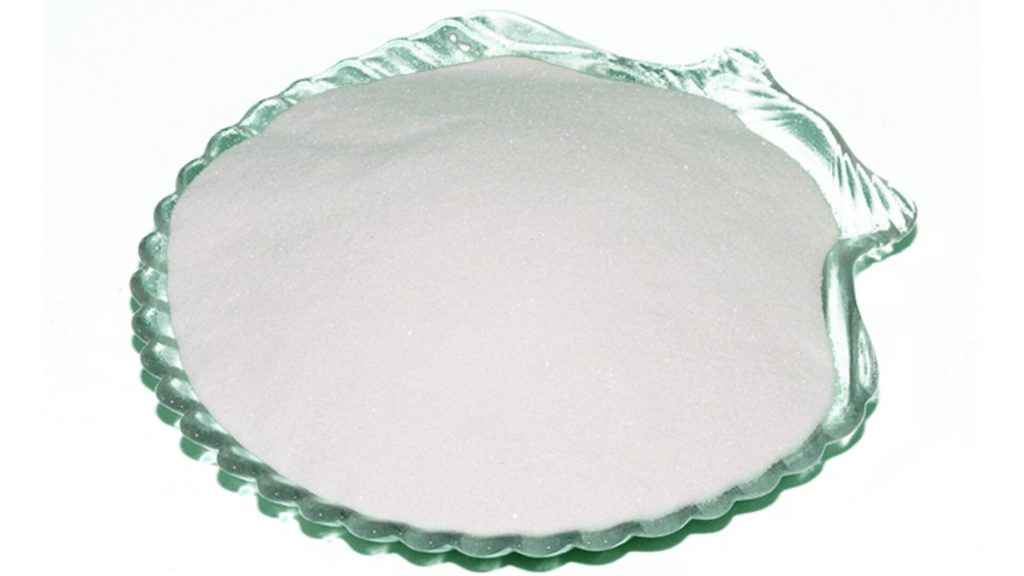 II. Production “Calculator”: Saving Money for the Customer from Wasted Costs
Every step in the production process holds potential for profit and value enhancement. Crushing and screening is a technical job. White corundum, after being burned, comes in huge lumps and needs to be crushed into sand of various particle sizes. The waste involved is enormous. Rough crushing methods produce large amounts of non-standard “waste” and “ultrafine powder.” This is money! Introducing advanced crushing equipment and precise screening systems can significantly increase the sand yield per ton of raw material. The resulting particles are more uniform in shape, have sharper edges, and naturally, better cutting force. This is called “efficiency through management.”
Particle size distribution must be meticulously controlled. Take micronized powder, for example; particle size distribution is a core secret. The particle size distribution is too wide, mixed with large and small particles. Customers using it for polishing will definitely get poor results and waste material. Through precise process control, we achieve a highly concentrated particle size distribution, resulting in high efficiency and uniform effects for customers, potentially even saving on material usage. Although they might spend a few hundred yuan more per ton, the overall processing cost per unit is lower. Isn’t this true cost-effectiveness?
III. Product “Customization”: Don’t Try to Do Everything, Be an Expert
We’re no longer in the era of selling a single product nationwide. Different industries have completely different requirements for white fused alumina. Grinding wheel manufacturers might prioritize toughness and strength; polishing and grinding industries might prioritize purity and cutting power; refractory material manufacturers might prioritize high-temperature resistance and bulk density.
Our manufacturers can’t rely on a single “general-purpose” product forever. We need to delve deeper and understand the specific application scenarios of our downstream customers. For example, could we develop a specialized product for the stainless steel polishing industry that boasts strong cutting power and is less prone to clogging? Could we provide the automotive glass industry with a batch of ultra-fine powders virtually free of impurities? These “tailor-made” products, because they precisely address the customer’s pain points, are worth paying a premium over generic products. They’re not just buying simple “white corundum,” but a “solution.” This is true high-level cost-effectiveness.
IV. Adding Value to Service: Letting the Product Speak for Itself and Letting Service Add Value
The “price” in cost-effectiveness isn’t just the product price, but also the customer’s overall usage cost. We can focus on improving our services to help customers reduce this overall cost. Technical guidance is crucial. Many customers, especially smaller ones, don’t really understand how to use products most efficiently. If our sales and technical staff can provide on-site guidance, telling them “what pressure, what concentration of mortar, and what material of grinding disc works best,” and helping them optimize their processes, they’ll see a 20% increase in efficiency and a 15% reduction in waste. Wouldn’t they be grateful? This is far more effective than simply offering a 200 yuan discount.
Find solutions for logistics and inventory. For long-term customers with large usage volumes, could we offer a “zero inventory” service? Based on your production plan, we’ll deliver goods to your door on time and in the required quantity, saving you warehousing costs and capital tied up in inventory. Isn’t this service itself valuable? After-sales response must be lightning fast. If a customer has a problem, can we respond within 24 hours and have someone on-site within 48 hours after a phone call? This rapid response capability gives customers a huge sense of security. They know that cooperating with us is “reliable and won’t delay things,” and this trust is a moat in itself.
Ultimately, improving the cost-effectiveness of white fused alumina products is a transformation from “extensive selling of raw materials” to “refined selling of value.” Stop focusing on price wars; that’s a bottomless pit. You won’t kill others, but you’ll starve yourself first. Focus on improving your internal capabilities, making your products stable, refined, and specialized—this is the foundation. Look ahead, delve into the customer’s application end, and become their “external brain” and “process consultant.” Treat service as another product, using intangible value to support tangible prices.
When customers feel that buying your product means not only quality, but also increased efficiency, reduced costs, and peace of mind, you’ll no longer need to explain “why my product is more expensive than others.” They’ll know perfectly well—”Your product, all things considered, is the most cost-effective.” This path is certainly more arduous than simply lowering prices, but only in this way can manufacturers escape the quagmire of low-end competition and truly win the market and the future.
II. Production “Calculator”: Saving Money for the Customer from Wasted Costs
Every step in the production process holds potential for profit and value enhancement. Crushing and screening is a technical job. White corundum, after being burned, comes in huge lumps and needs to be crushed into sand of various particle sizes. The waste involved is enormous. Rough crushing methods produce large amounts of non-standard “waste” and “ultrafine powder.” This is money! Introducing advanced crushing equipment and precise screening systems can significantly increase the sand yield per ton of raw material. The resulting particles are more uniform in shape, have sharper edges, and naturally, better cutting force. This is called “efficiency through management.”
Particle size distribution must be meticulously controlled. Take micronized powder, for example; particle size distribution is a core secret. The particle size distribution is too wide, mixed with large and small particles. Customers using it for polishing will definitely get poor results and waste material. Through precise process control, we achieve a highly concentrated particle size distribution, resulting in high efficiency and uniform effects for customers, potentially even saving on material usage. Although they might spend a few hundred yuan more per ton, the overall processing cost per unit is lower. Isn’t this true cost-effectiveness?
III. Product “Customization”: Don’t Try to Do Everything, Be an Expert
We’re no longer in the era of selling a single product nationwide. Different industries have completely different requirements for white fused alumina. Grinding wheel manufacturers might prioritize toughness and strength; polishing and grinding industries might prioritize purity and cutting power; refractory material manufacturers might prioritize high-temperature resistance and bulk density.
Our manufacturers can’t rely on a single “general-purpose” product forever. We need to delve deeper and understand the specific application scenarios of our downstream customers. For example, could we develop a specialized product for the stainless steel polishing industry that boasts strong cutting power and is less prone to clogging? Could we provide the automotive glass industry with a batch of ultra-fine powders virtually free of impurities? These “tailor-made” products, because they precisely address the customer’s pain points, are worth paying a premium over generic products. They’re not just buying simple “white corundum,” but a “solution.” This is true high-level cost-effectiveness.
IV. Adding Value to Service: Letting the Product Speak for Itself and Letting Service Add Value
The “price” in cost-effectiveness isn’t just the product price, but also the customer’s overall usage cost. We can focus on improving our services to help customers reduce this overall cost. Technical guidance is crucial. Many customers, especially smaller ones, don’t really understand how to use products most efficiently. If our sales and technical staff can provide on-site guidance, telling them “what pressure, what concentration of mortar, and what material of grinding disc works best,” and helping them optimize their processes, they’ll see a 20% increase in efficiency and a 15% reduction in waste. Wouldn’t they be grateful? This is far more effective than simply offering a 200 yuan discount.
Find solutions for logistics and inventory. For long-term customers with large usage volumes, could we offer a “zero inventory” service? Based on your production plan, we’ll deliver goods to your door on time and in the required quantity, saving you warehousing costs and capital tied up in inventory. Isn’t this service itself valuable? After-sales response must be lightning fast. If a customer has a problem, can we respond within 24 hours and have someone on-site within 48 hours after a phone call? This rapid response capability gives customers a huge sense of security. They know that cooperating with us is “reliable and won’t delay things,” and this trust is a moat in itself.
Ultimately, improving the cost-effectiveness of white fused alumina products is a transformation from “extensive selling of raw materials” to “refined selling of value.” Stop focusing on price wars; that’s a bottomless pit. You won’t kill others, but you’ll starve yourself first. Focus on improving your internal capabilities, making your products stable, refined, and specialized—this is the foundation. Look ahead, delve into the customer’s application end, and become their “external brain” and “process consultant.” Treat service as another product, using intangible value to support tangible prices.
When customers feel that buying your product means not only quality, but also increased efficiency, reduced costs, and peace of mind, you’ll no longer need to explain “why my product is more expensive than others.” They’ll know perfectly well—”Your product, all things considered, is the most cost-effective.” This path is certainly more arduous than simply lowering prices, but only in this way can manufacturers escape the quagmire of low-end competition and truly win the market and the future.
 English
 Русский
 日本語
日本語 한국어
한국어 Español
 Tiếng Việt
 Deutsch
 Français
 Italiano
 Português