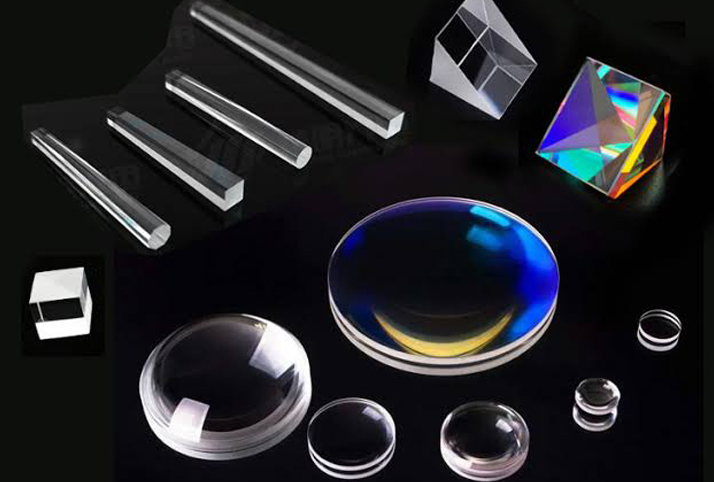
Optical glass polishing is the final and most critical process in determining the imaging quality of optical components. Whether for camera lenses, microscope objectives, or high-precision optics used in laser systems, surface roughness, subsurface damage depth, and form accuracy largely depend on the polishing abrasive system. Unlike grinding, which relies primarily on mechanical material removal, optical glass polishing is a chemo-mechanical process in which both chemical reactions and mechanical abrasion work together. Therefore, the selection of polishing abrasives directly influences both the polishing process and the final surface quality.
1. Material Removal Mechanism
Material removal during optical glass polishing is not achieved solely through mechanical scratching by abrasive particles. For hydrated silicate glass, localized chemical reactions occur between the abrasive particles and the glass surface under pressure and relative motion, forming a softer hydrated layer. This layer is then mechanically removed by the abrasives, and the cycle repeats continuously.
This chemo-mechanical polishing (CMP) mechanism enables precise nanometer-scale material removal while minimizing brittle fractures and subsurface crack propagation commonly associated with grinding. Consequently, the chemical activity of the abrasive becomes a key performance factor, alongside hardness and particle size.
2. Main Polishing Abrasive Systems
2.1 Cerium oxide (CeO2)
Cerium oxide (CeO2) polishing powder is currently the most widely used abrasive system for optical glass polishing. Its advantage lies in the strong chemical reactivity resulting from the Ce3+/Ce4+ valence shift, enabling it to react with the silicon-oxygen network on the glass surface to generate cerium silicate intermediates. This allows for high material removal rates under relatively low mechanical pressure, while simultaneously achieving excellent surface finish. The performance of cerium oxide polishing powder is closely related to its purity, crystal structure (mostly fluorite), particle size distribution, and particle morphology. Industrial-grade products typically require control of the Ce/RE ratio, rare earth impurity content, and the proportion of agglomerated particles.
Furthermore, some industrial-grade cerium oxide polishing powders are also modified by doping with rare earth elements such as lanthanum (La). The effects of doping are mainly twofold: firstly, the difference in ionic radius between La3+ and Ce4+ causes lattice distortion and increases oxygen vacancy concentration, which further enhances the activity of Ce3+/Ce4+ valence transition, thereby improving chemical removal efficiency; secondly, doping can improve particle dispersibility and inhibit agglomeration, resulting in better surface uniformity after polishing.
2.2 Zirconia (ZrO2)
Zirconium oxide (ZrO2) polishing powders have weaker chemical activity than cerium oxide, resulting in a relatively lower material removal rate. However, they offer higher hardness and wear resistance, making them suitable for applications where material removal rates are not critical, but surface uniformity and long-term polishing stability are paramount. They are often used in combination with cerium oxide to balance removal rate and surface quality.
2.3 Alumina (Al2O3)
Alumina (Al2O3) abrasives have high hardness and relatively weak chemical activity. Material removal is primarily achieved through mechanical action. They are often used in fine grinding or rough polishing processes before final polishing, providing a uniform initial surface condition for subsequent fine polishing. They are rarely used alone for final fine polishing.
2.4 Silica (SiO2)
Colloidal silica particles are fine and nearly spherical in shape, exhibiting a gentle mechanical abrasion effect. They are suitable for polishing high-end optical components requiring extremely high surface roughness and highly sensitive to subsurface damage. However, their material removal efficiency is relatively low, and the process is time-consuming. They are commonly used in the final polishing stage of semiconductor optics and precision instrument lenses.
3.Influence of Particle Size Distribution and Morphology
The particle size distribution of polishing abrasives directly determines the lower limit of surface roughness and the upper limit of polishing efficiency. Overly coarse particles will leave scratches on the surface, while overly fine particles will significantly reduce the removal rate. Besides the average particle size, the width of the particle size distribution is equally important—an excessively wide distribution indicates the presence of a small number of coarse particles, which can easily cause localized scratches. This is also an important basis for evaluating the quality of polishing powder, particularly regarding particle agglomeration control and the level of the grading process.
Regarding particle morphology, spherical or near-spherical particles are more conducive to obtaining low-roughness surfaces than angular particles. This is also the advantage of colloidal methods and hydrothermal methods compared to traditional mechanical grinding methods.
4. Downstream Application Requirements
Currently, relevant downstream applications mainly include optical devices, precision optical glass, flat glass, and LCD panels, among others. However, different application scenarios have different requirements for surface quality and cleanliness:
① In the polishing of optical devices such as camera lenses and telescope objectives, the main requirement is to achieve nanoscale surface roughness control to ensure light transmittance and imaging quality. These applications are commonly seen in astronomical observation and medical imaging.
② Precision optical glass polishing requires a precise match between material removal rate and surface flatness to avoid over-polishing or under-polishing, in order to meet the surface accuracy requirements of high-end optical systems.
③ In the flat glass field, especially in the polishing of ultra-thin glass substrates for LCD displays, high overall flatness is required, making it one of the fundamental process steps in 4K/8K display panel production.
④ In LCD panel-related polishing applications, the polishing powder formulation also needs to consider the control of metal ion contamination to avoid residual metal ions affecting the yield of subsequent chip manufacturing and the stability of display performance.
 5.Conclusion
The formulation iteration of cerium oxide-based polishing powder largely depends on the purity control and multi-element proportioning capabilities of upstream rare earth raw materials. This places high demands on the stability of rare earth raw material supply and the level of refined processing. China’s concentrated rare earth resources and complete refined rare earth compound processing industrial chain provide a raw material advantage for the doping and modification research and development and large-scale production of cerium oxide polishing powder. This is also one of the fundamental conditions for domestic manufacturers to have strong formulation adjustment and production capacity assurance capabilities in this field.
In short, the selection of optical glass polishing abrasives essentially involves seeking a balance between removal efficiency, surface quality, and process cost. It requires comprehensive judgment based on glass material, component precision requirements, and the connection with subsequent processes.

 English
 Русский
 日本語
日本語 한국어
한국어 Español
 Tiếng Việt
 Deutsch
 Français
 Italiano
 Português