Potential Applications of Alumina Powder in the Aerospace Field
December 12,2025
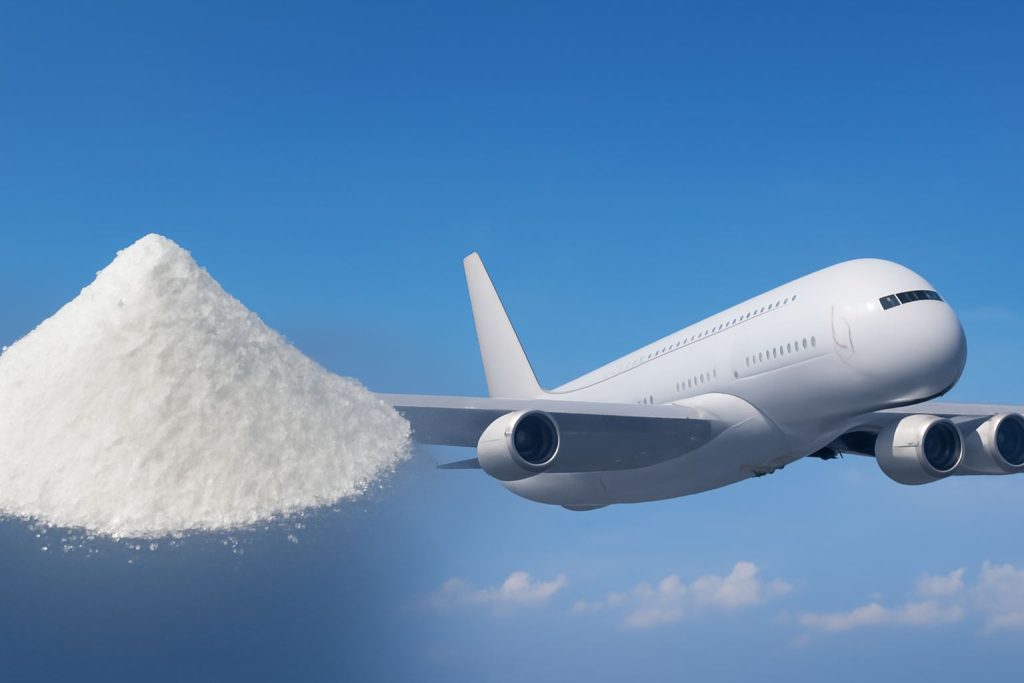
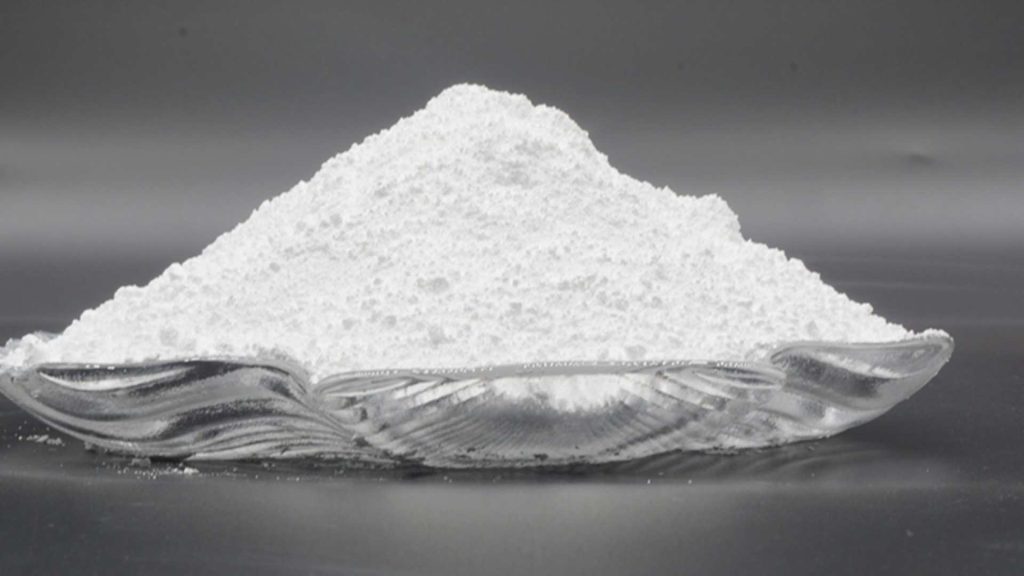
Old Zhang spent his entire career at the Aerospace Materials Institute. Before retiring, his favorite pastime was taking his apprentices to the warehouse to identify materials. He unscrewed an unassuming white plastic bucket, scooped up a spoonful of fine, creamy white powder with a sampling spoon, and gently tossed it under the light. The dust slowly settled in the beam of light, gleaming softly. “Don’t underestimate this white powder,” Old Zhang always said, squinting his eyes. “Whether the planes and rockets we build can withstand the elements in the sky sometimes depends on the capabilities of this ‘flour.'”
The “white powder” he referred to was alumina powder. It sounds ordinary—isn’t it just refined from bauxite? But alumina powder used in aerospace is completely different from ordinary industrial-grade alumina. Its purity is almost four nines after the decimal point; its particle size is measured in nanometers and micrometers; its morphology—whether spheres, flakes, or needles—is all carefully considered. In Lao Zhang’s words, “This is the fine food that ‘supplements the calcium’ for the nation’s heavy equipment.”
As for what this stuff can do in the aerospace field, there are countless applications. Let’s start with the most “hardcore”—giving aircraft “armor.” What are the biggest fears of anything that flies in the sky, whether it’s a civilian airliner or a military fighter jet? Extreme high temperatures and wear and tear. Engine turbine blades rotate at high speeds in exhaust gases at thousands of degrees Celsius; ordinary metals would soften and melt long ago. What to do? Engineers came up with a brilliant solution: coating the blade surface with a special ceramic coating. The main structural material of this coating is often alumina powder.
Why choose it? First, it’s heat-resistant, with a melting point exceeding 2000 degrees Celsius, making it an excellent “heat-insulating suit.” Second, it’s hard and wear-resistant, protecting the blades from the erosion of dust particles in high-speed airflow. Even better, by adjusting the particle size of the alumina powder and adding other elements, the porosity, toughness, and adhesion to the metal substrate of the coating can be controlled. As a veteran workshop worker jokingly put it, “It’s like applying a layer of high-grade ceramic sunscreen to the turbine blades—it’s both sun-protective and scratch-resistant.” How important is this “sunscreen”? It allows the turbine blades to operate at higher temperatures, and for every tens of degrees the engine temperature increases, thrust increases significantly, while fuel consumption decreases. For aircraft that fly tens of thousands of kilometers, the fuel savings and performance improvements are astronomical. If the thermal barrier coating is the “external application,” then the role of alumina powder in composite materials is the “internal supplement.”
Modern aircraft, satellites, and rockets extensively use composite materials to reduce weight. However, these resin-based composites have a weakness—they are not wear-resistant, susceptible to high temperatures, and lack sufficient hardness. Clever materials scientists have incorporated alumina powder, especially nano-sized alumina powder, evenly into the resin, like kneading dough. This incorporation has remarkable effects: the material’s hardness, wear resistance, heat resistance, and even dimensional stability all improve dramatically.
For example, aircraft cabin floors, certain interior components, and even some non-load-bearing structural parts utilize this alumina-reinforced composite material. This not only makes them lighter and stronger but also effectively retardant, significantly improving safety. The precision instrument supports on satellites, which require minimal dimensional change under extreme temperature cycles, also owe much to this material. It’s like “injecting” a skeleton into flexible plastic, giving it both strength and flexibility.
Alumina powder also has a “hidden skill,” crucial in the aerospace field—it’s an excellent heat insulation and ablation-resistant material.
When a spacecraft re-enters the atmosphere from space, it’s like falling into a plasma furnace of thousands of degrees. The re-entry capsule’s outer shell must have a heat-resistant layer that “sacrifices itself for the greater good.” Alumina powder plays a vital role in the formulation of many heat-resistant materials. When combined with other materials, it forms a hard, porous, and highly insulating ceramic layer on the surface. This layer slowly ablates at high temperatures, carrying away heat and maintaining the cabin temperature within a survival range for astronauts through its own consumption. “Every time I see the return capsule successfully land, and the outer layer of heat-resistant material is charred black, I think of those alumina-based formulas we repeatedly refined,” remarked a senior engineer in charge of heat-resistant materials. “It burned up, but its mission was perfectly accomplished.”
Beyond these “front-stage” hardcore applications, alumina powder is equally indispensable “behind the scenes.” For example, in manufacturing precision components for aircraft and rockets, many high-strength alloys need to be sintered. During sintering, powder metallurgy parts need to be supported in a high-temperature furnace using specific “shims” or “firing plates.” These plates must be heat-resistant, non-deformable, and not stick to the product. Firing plates made of high-purity alumina ceramic become the ideal choice. Furthermore, in the grinding and polishing processes of some ultra-precision parts, extremely high-purity alumina micropowder is a safe and efficient polishing medium.
Of course, such a valuable material cannot be used carelessly. Is the purity sufficient? Is the particle size distribution uniform? Is there any agglomeration? Is the dispersibility good? Every indicator affects the performance of the final product. In the aerospace field, even the slightest error can lead to disastrous consequences. Therefore, from raw material selection and processing modification to application techniques, every step is subject to rigorous, almost demanding, control standards.
Standing in a modern aircraft assembly plant, gazing at the streamlined fuselage gleaming coldly under the lights, you realize that this complex system soaring through the skies is the result of countless seemingly ordinary materials like alumina powder, each playing its role to its fullest potential. It doesn’t form the main framework, yet it strengthens the structure; it doesn’t provide massive power, yet it protects the core of the propulsion system; it doesn’t directly determine the course, yet it ensures flight safety.
From high-temperature resistant coatings to reinforced composite materials, and even self-sacrificing heat-resistant layers, the application of alumina powder in the aerospace field is continuously deepening towards lighter, stronger, and more resistant to extreme environments. In the future, with the development of alumina materials with higher purity and more unique morphologies (such as nanowires and nanosheets), it may play unexpected roles in thermal management, electronic device heat dissipation, and even in-situ manufacturing in space.
This white powder, silent and stable, contains immense energy that supports humanity’s exploration of the heavens. It reminds us that on the journey to the stars, we need not only grand visions and surging power, but also these silent and steadfast “invisible wings” that maximize the performance of basic materials. The next time you look up at an airplane soaring overhead or watch the magnificent spectacle of a rocket launch, you might remember that within that body of steel and composite materials, there is such a “white spirit,” silently guarding the safety and excellence of every flight.

 English
 Русский
 日本語
日本語 한국어
한국어 Español
 Tiếng Việt
 Deutsch
 Français
 Italiano
 Português