Welcome to Zhengzhou Xinli Wear-Resistant Material Co. Ltd.
Welcome to Zhengzhou Xinli Wear-Resistant Material Co. Ltd.
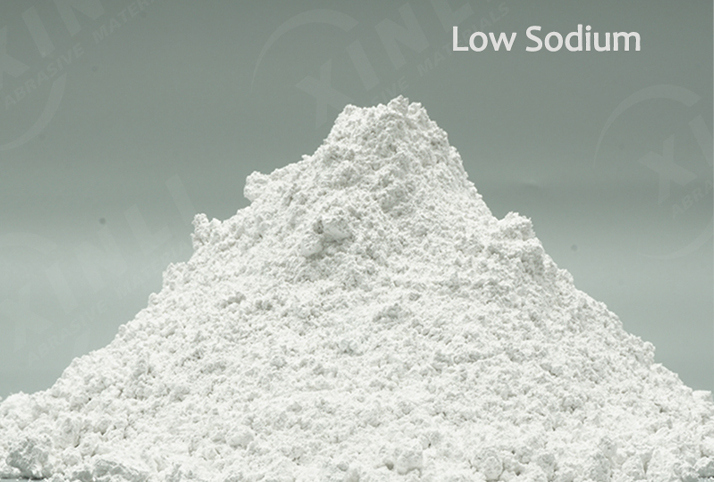
When people hear the term White Fused Alumina Micropowder, many outside the abrasive industry may find it unfamiliar. Yet this fine white powder is quietly involved in countless aspects of daily life—from smartphone screens and eyeglass lenses to automotive components and aerospace parts. As a high-purity, high-hardness synthetic abrasive, white fused alumina micropowder is valued for its precise production process and wide range of industrial applications.
Many assume micropowder is simply made by crushing larger white fused alumina grains, but the reality is far more complex.
High-quality white fused alumina micropowder begins with premium industrial alumina powder, with an Al₂O₃ purity of over 99.5%. Lower purity materials can affect hardness, whiteness, and chemical stability. Before smelting, the raw powder is screened and air-classified to remove coarse particles and ensure uniform particle size for more efficient melting.
The pretreated alumina powder is then melted in a three-phase electric arc furnace at temperatures of 2050–2150°C for 4–6 hours. At this extreme temperature, the alumina fully melts into liquid form, while impurities separate and settle due to density differences.
Temperature control is critical during this stage. The electrodes are inserted deep into the molten pool to ensure uniform heating. During cooling, rapid cooling is applied at high temperatures, followed by slower cooling at lower temperatures, allowing stable α-Al₂O₃ crystals to form. Once cooled, the material solidifies into dense, white fused alumina lumps with excellent hardness and toughness.
The fused alumina blocks are first crushed by jaw crushers, then finely reduced by roller mills, and finally processed into micron-scale powder using jet mills.
To achieve precise particle size distribution, advanced hydraulic overflow classification and air-flow classification systems are used to separate different grades such as W5, W10, and W20, with some products reaching submicron levels.
After classification, the powder undergoes acid washing, water washing, drying, and magnetic separation to remove residual iron, sodium, and other impurities. Final quality inspection includes microscopic examination and particle size analysis before packaging.
Thanks to its high hardness, high purity, and chemical stability, white fused alumina micropowder is widely used across multiple industries.
This is one of the most important applications. Products such as optical lenses, LCD panels, and semiconductor wafers require extremely smooth and precise surfaces.
With a Mohs hardness of 9—second only to diamond—white fused alumina micropowder offers sharp, uniform particles that polish efficiently without scratching the surface.
It is commonly used for:
Many polishing compounds and abrasive slurries also use white fused alumina micropowder as a key ingredient.
White fused alumina micropowder is used in the production of:
These tools provide high sharpness, lower heat generation, and longer service life, making them ideal for grinding stainless steel, hard alloys, ceramics, and wood surfaces.
With a melting point above 2200°C and excellent resistance to heat, acid, and alkali, white fused alumina micropowder is an ideal raw material for advanced refractory products.
It is widely used in:
Although it appears to be just an ordinary white powder, white fused alumina micropowder is the result of a rigorous and sophisticated manufacturing process. From raw material selection to final packaging, every step requires precise control to ensure high purity and consistent performance.
As industries such as precision manufacturing, electronics, optics, and semiconductors continue to grow, demand for higher-quality abrasive materials will only increase. In the future, white fused alumina micropowder will play an even greater role in advanced and refined industrial applications.
As an “invisible polishing expert,” white fused alumina micropowder continues to shape the modern world—one smooth surface at a time.

 English
 Русский
 日本語
日本語 한국어
한국어 Español
 Tiếng Việt
 Deutsch
 Français
 Italiano
 Português
 中文 (中国)